
1. Introduction
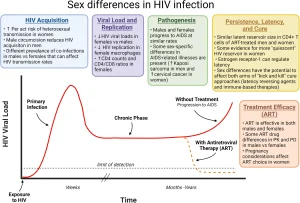
Advances in the understanding of Human Immunodeficiency Virus (HIV) biology and its long-term management have revealed that antiretroviral therapy (ART) does not act identically in all patients. Increasing clinical and pharmacological evidence indicates that both the toxicity profile and therapeutic efficacy of antiretroviral drugs may differ between male and female patients.
Multiple clinical studies have reported sex-based differences in key treatment outcomes, including:
- Rates of HIV disease progression
- Virologic suppression response to ART
- Immune reconstitution measured by CD4 T-cell recovery
In addition to efficacy differences, women have consistently been shown to experience higher frequencies of specific adverse drug reactions, such as:
- Lipodystrophy and abnormal fat redistribution
- Dyslipidemia
- Lactic acidosis
- Cutaneous hypersensitivity reactions (rash)
- Hepatic toxicity and liver enzyme abnormalities
These observations suggest that biological sex may significantly influence antiretroviral drug response, although the underlying mechanisms remain incompletely understood.
2. Biological Mechanisms Underlying Sex Differences in Drug Response
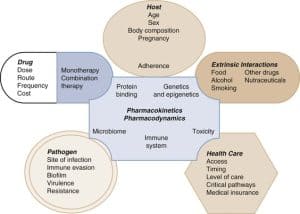
Several physiological and molecular mechanisms have been proposed to explain sex-related variability in pharmacokinetics (PK) and pharmacodynamics (PD) of antiretroviral agents:
2.1 Physiological Differences
Sex-based physiological variations may affect drug absorption, distribution, metabolism, and elimination. These include:
- Differences in total body weight and body composition
- Variations in fat distribution (higher adipose tissue proportion in women)
- Plasma protein binding capacity differences
- Gastrointestinal motility and gastric acid secretion
- Renal function and glomerular filtration rate
2.2 Hormonal Influence
Sex hormones such as estrogen and progesterone may modulate:
- Hepatic enzyme activity
- Drug metabolism pathways
- Expression of drug transporters
2.3 Genetic and Molecular Factors
Sex-related variability may also arise from:
- Differential expression of drug transporter proteins (e.g., efflux and uptake transporters)
- Variations in cytochrome P450 (CYP450) enzyme activity involved in phase I metabolism
- Differences in phase II conjugation enzyme activity
2.4 Pharmacokinetic Consequence
Although diverse in origin, these mechanisms converge on a central outcome: alteration of drug pharmacokinetics between males and females, which in turn affects drug exposure, efficacy, and toxicity.
3. Methods Overview
This review synthesizes published scientific literature evaluating sex and gender differences in antiretroviral pharmacokinetics and pharmacodynamics.
3.1 Study Selection Criteria
Studies were included if they:
- Reported sex-based differences in antiretroviral pharmacokinetics
- Included pharmacodynamic outcomes linked to pharmacokinetic variation
- Focused on adult human populations
Pediatric-only studies were excluded to avoid developmental confounding factors.
3.2 Data Sources and Search Strategy
The MEDLINE database (via PubMed and OVID) was systematically searched (1990–2006) using combinations of keywords such as:
- HIV, antiretroviral therapy, HAART
- Pharmacokinetics, pharmacodynamics
- Sex, gender
- Drug classes: NRTIs, NNRTIs, protease inhibitors
Additional sources included:
- Conference abstracts (e.g., HIV pharmacology and infectious diseases conferences)
- Reference lists of key review articles
4. Sex Differences in Antiretroviral Pharmacokinetics
4.1 Nucleoside Reverse Transcriptase Inhibitors (NRTIs)
NRTIs are prodrugs requiring intracellular phosphorylation to become active. Therefore, intracellular triphosphate (TP) concentrations are more clinically relevant than plasma levels.
Findings
Clinical studies have demonstrated that:
- Women exhibit higher intracellular concentrations of active NRTI metabolites than men
- This includes drugs such as zidovudine (ZDV) and lamivudine (3TC)
- Higher intracellular exposure correlates with faster virologic suppression in some cohorts
Clinical Evidence
One major longitudinal study reported:
- 2.3-fold higher ZDV-TP levels in women
- 1.6-fold higher 3TC-TP levels in women
- Faster time to viral suppression in female patients
Additional ACTG trial data confirmed:
- Higher total phosphorylated zidovudine levels in women even after weight adjustment
Pharmacodynamic Implications
Increased intracellular activation may explain:
- Enhanced antiviral response in some women
- Higher incidence of NRTI-related toxicity (mitochondrial toxicity, lactic acidosis)
4.2 Non-Nucleoside Reverse Transcriptase Inhibitors (NNRTIs)
NNRTIs act by binding directly to HIV reverse transcriptase without requiring phosphorylation. Their plasma concentration strongly correlates with both efficacy and toxicity.
Nevirapine (NVP)
Strong evidence indicates sex-related differences:
- Women show higher plasma concentrations of NVP
- Risk of rash is 3–10 times higher in women
- Hepatotoxicity risk is significantly increased in females
Efavirenz (EFV)
Studies show mixed but important trends:
- Higher EFV plasma concentrations in women in several cohorts
- Increased likelihood of reaching toxic thresholds (>4 µg/mL)
- Some pharmacokinetic models show slightly reduced clearance in females, though not always clinically significant
Delavirdine (DLV)
Evidence suggests:
- Higher plasma exposure in women
- Lower clearance rates compared with men
- Increased trough concentrations in female patients
4.3 Protease Inhibitors (PIs)
Protease inhibitors demonstrate the most complex sex-related pharmacokinetic variability, especially when boosted with ritonavir.
Saquinavir (SQV)
Studies show:
- Higher plasma exposure (AUC and Cmin) in women
- Reduced drug clearance in females
- Strong correlation between higher drug levels and improved virologic suppression
Indinavir (IDV)
Findings include:
- Lower clearance in women
- Higher risk of elevated drug concentrations associated with toxicity (e.g., urological effects)
- Some variability depending on study design and population
Lopinavir (LPV)
Results are inconsistent:
- Some studies show higher plasma concentrations in women
- Others show no significant sex differences
- Body weight appears to be a confounding factor
Ritonavir Boosting Effect
A key observation across multiple studies:
- Sex differences become more pronounced when PIs are co-administered with ritonavir
- Suggests that differences in drug boosting and metabolism may contribute significantly to variability
4.4 Other Antiretroviral Agents
Enfuvirtide (Fusion Inhibitor)
- Women show approximately 20% lower drug clearance after weight adjustment
- No clear evidence of sex-based efficacy differences
Newer Drug Classes
Limited data exist for:
- Integrase strand transfer inhibitors
- CCR5 receptor antagonists
However, pharmacokinetic variability by sex remains a potential area of ongoing clinical interest.
5. Clinical Implications
The accumulated evidence suggests that:
- Women may experience higher systemic and intracellular exposure to certain antiretrovirals
- This can result in:
- Improved virologic response in some cases
- Increased risk of drug toxicity in others
- Sex differences are drug-specific and not uniform across all ART classes
A major limitation across studies is the underrepresentation of women in clinical trials, which restricts the ability to draw definitive conclusions.
6. Conclusions and Future Directions
Current scientific evidence supports the existence of sex-based differences in antiretroviral pharmacokinetics and pharmacodynamics, although the magnitude and clinical relevance vary by drug class.
Key conclusions include:
- NRTIs: Higher intracellular activation in women may influence both efficacy and toxicity
- NNRTIs: Women often exhibit higher plasma concentrations and increased adverse event risk
- Protease inhibitors: Sex differences are more evident when ritonavir boosting is used
- Overall: Pharmacokinetic variability is a major driver of sex-based clinical differences