Introduction to Cellular Distribution of Psychotropic Drugs
The pharmacological activity of psychotropic drugs is determined not only by receptor affinity and metabolic stability, but also by their intracellular distribution patterns. Drug distribution across tissues depends on multiple pharmacokinetic parameters, including membrane permeability, regional blood flow, plasma protein binding, tissue affinity, and intracellular sequestration mechanisms. Together, these factors govern drug bioavailability, tissue accumulation, duration of action, and the potential for pharmacokinetic interactions.
For basic lipophilic psychotropic drugs, including antidepressants, neuroleptics, and selective serotonin reuptake inhibitors (SSRIs), tissue distribution is often extensive, producing a large apparent volume of distribution. This phenomenon is largely driven by two complementary cellular mechanisms:
- Binding to cellular phospholipid membranes
- Lysosomal trapping within acidic intracellular compartments
These mechanisms have major implications not only for drug disposition, but also for therapeutic efficacy, adverse effects, tissue toxicity, and drug–drug interactions.
Phospholipid Binding and Membrane Partitioning
Role of Membrane Affinity in Psychotropic Drug Distribution
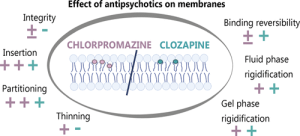
Many psychotropic compounds possess amphiphilic and cationic properties that promote strong interaction with membrane phospholipids. Because neuronal membranes, intracellular organelles, and pulmonary surfactants contain abundant phospholipid structures, these drugs can accumulate substantially in tissues.
This nonspecific phospholipid binding contributes to:
- High tissue uptake
- Prolonged tissue retention
- Increased distribution volume
- Slow elimination kinetics
- Reservoir or depot effects influencing sustained drug action
The extent of membrane partitioning depends strongly on physicochemical properties such as:
- Lipophilicity (log P)
- Acid dissociation constant (pKa)
- Molecular structure
- Presence of ionizable functional groups
Different tissues also vary in phospholipid composition, influencing tissue-selective drug accumulation.
Lysosomal Trapping as a Major Distribution Mechanism
Acidic Compartments and Lysosomotropism
A second critical determinant of psychotropic drug distribution is lysosomal trapping, also referred to as acidotropism or lysosomotropism.
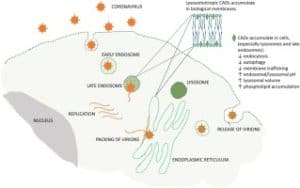
Weakly basic lipophilic drugs can diffuse across membranes in their uncharged form. Once inside acidic intracellular organelles such as lysosomes, they become protonated and lose their ability to diffuse back into the cytosol, leading to intracellular accumulation.
This ion trapping phenomenon drives selective sequestration of drugs in:
- Lysosomes
- Endosomes
- Secretory granules
- Other acidic vesicular compartments
Among these, lysosomes represent the principal acidic reservoir.
Why Lysosomes Matter in Pharmacokinetics
Lysosomes are membrane-bound organelles with an acidic internal pH typically between 4 and 5, maintained by ATP-dependent proton pumps.
Because of this acidic environment, they function as intracellular drug depots for many psychotropic agents.
Lysosomes are particularly abundant in:
- Lung tissue
- Liver Kupffer cells
- Kidney cells
- Macrophages
- Spleen
These organs often show the highest uptake of lysosomotropic drugs.
This sequestration can influence:
- Tissue-specific drug accumulation
- Intracellular drug persistence
- Delayed pharmacodynamic effects
- Redistribution phenomena
- Toxicological risk
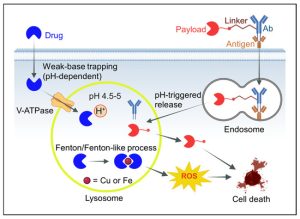
Cellular Role of Lysosomal Trapping in Drug Distribution
Saturable and Dynamic Drug Sequestration
Lysosomal trapping is not a passive infinite-storage mechanism.
It is:
- Saturable
- Energy-dependent
- Dependent on cellular integrity
- Sensitive to intralysosomal pH changes
When multiple lysosomotropic drugs are co-administered, competition for lysosomal accumulation may occur.
Co-accumulation can raise intralysosomal pH, reduce trapping efficiency, and shift drugs from lysosomal storage into membranes and cytosol.
This redistribution can alter intracellular drug concentrations relevant to receptor binding and pharmacological action.
Functional Consequences of Lysosomal Accumulation
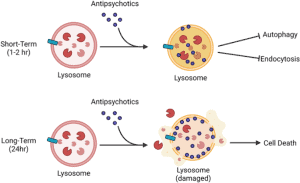
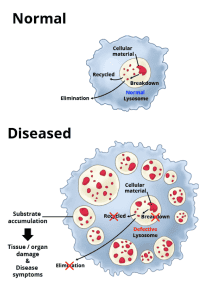
High intralysosomal concentrations of psychotropic drugs can influence cell biology directly.
Documented consequences include:
- Inhibition of lysosomal hydrolases
- Altered endocytosis and exocytosis
- Drug-induced phospholipidosis
- Mucopolysaccharide accumulation
- Perturbation of intracellular trafficking
These effects may contribute both to therapeutic mechanisms and chronic toxicity.
Distribution Characteristics of Psychotropic Drugs
Differential Contributions of Membrane Binding and Lysosomal Trapping
Most psychotropic drugs exhibit some degree of lysosomotropism, but the relative contribution of lysosomal sequestration versus phospholipid binding varies between compounds.
Drugs Primarily Influenced by Phospholipid Binding
For several compounds, membrane binding dominates tissue distribution, including:
- Imipramine
- Desipramine
- Amitriptyline
- Fluoxetine
- Sertraline
- Promazine
These compounds show strong tissue uptake driven largely by lipid affinity.
Drugs With Strong Lysosomal Trapping Components
Other psychotropics demonstrate a much larger lysosomal trapping component, notably:
- Thioridazine
- Perazine
For these compounds, lysosomal sequestration contributes substantially to tissue distribution and interaction potential.
Tissue Dependence of Distribution Mechanisms
Relative contributions of these mechanisms depend not only on drug chemistry but also on tissue properties, including:
- Lysosomal density
- Lipid composition
- Surfactant content
- Protein binding characteristics
For example, pulmonary tissue shows complex uptake behavior because surfactant phospholipids may strongly bind lipophilic drugs, modifying lysosomal contributions.
Distribution Interactions Between Antidepressants and Neuroleptics
Beyond Metabolic Drug–Drug Interactions
Pharmacokinetic interactions between antidepressants and neuroleptics are often attributed to cytochrome P450 inhibition.
However, evidence indicates an additional mechanism exists at the level of intracellular distribution.
Because many of these drugs share lysosomotropic properties, they may compete for lysosomal trapping.
This competition can reduce intralysosomal sequestration and redistribute drug toward:
- Cytoplasm
- Membranes
- Plasma circulation
- Secondary tissues
This creates a previously underappreciated mechanism of drug interaction.
Redistribution Toward the Heart and Cardiotoxicity Risk
A clinically important consequence of this redistribution may be drug shifting from lysosome-rich tissues such as:
- Lungs
- Liver
- Kidneys
Toward tissues relatively poor in lysosomes, particularly the heart.
This may increase:
- Cardiac exposure
- Arrhythmogenic risk
- Anticholinergic toxicity
- Adverse neuroleptic side effects
Combined administration of tricyclic antidepressants and thioridazine has been proposed as a particularly relevant example.
This mechanism may help explain observed cardiotoxic interactions that cannot be fully attributed to metabolism alone.
Distribution of Psychotropic Drugs in the Brain
Brain-Specific Distribution Complexity
Brain distribution of psychotropic drugs is especially complex because cerebral tissue combines:
- High phospholipid abundance
- Region-specific lysosomal density
- Heterogeneous cellular composition
These factors create marked variability in intracellular drug handling.
Distribution in Grey Matter Versus White Matter
Studies indicate psychotropic drug uptake is generally higher in grey matter than in white matter.
This likely reflects:
- Greater lysosomal abundance in neurons
- Distinct phospholipid composition
- Higher density of negatively charged membrane components
- Increased high-affinity binding sites
As a result, both membrane binding and lysosomal trapping are often stronger in neuronal regions.
Neuronal Versus Astroglial Accumulation
A major finding is that psychotropic drugs accumulate more strongly in neurons than astrocytes.
Neurons appear particularly favorable for:
- Lysosomal sequestration
- Intracellular depot formation
- Distribution-based drug interactions
By contrast, astrocytes rely more heavily on nonspecific binding mechanisms.
This suggests intracellular drug interactions may occur primarily within neuronal compartments.
Functional Relevance for Drug Action
Influence on Pharmacodynamic Activity
Redistribution away from lysosomal depots may increase free drug concentrations in membranes and tissue fluids.
This may enhance interaction with:
- Neurotransmitter receptors
- Transporters
- Ion channels
- Signaling pathways
Consequently, intracellular distribution mechanisms may directly modulate drug potency and response.
Possible Contribution to Therapeutic Latency
Slow accumulation of psychotropic drugs in acidic intracellular compartments has also been proposed as a factor contributing to therapeutic latency.
This hypothesis suggests delayed antidepressant or neuroleptic responses may partly reflect gradual intracellular redistribution and altered organelle physiology.
This represents a compelling mechanistic complement to receptor-centered models.
Clinical Implications of Distribution-Based Drug Interactions
Relevance for Combination Therapy
Because antidepressants and neuroleptics are frequently co-administered in:
- Psychotic depression
- Treatment-resistant depression
- Schizophrenia-associated depression
understanding intracellular distribution interactions has important clinical implications.
Potential consequences include:
- Altered tissue exposure
- Unexpected toxicity
- Modified therapeutic response
- Need for dose adjustment
- Increased importance of monitoring in polypharmacy
These interactions may be especially relevant when combining highly lysosomotropic compounds.
Mechanistic Conclusions