
Introduction
Tuberculosis (TB) and Human Immunodeficiency Virus (HIV) co-infection remain a major cause of morbidity and mortality in children, particularly in regions with high disease burden. Infants who are perinatally exposed to HIV are especially vulnerable due to their immature immune systems and increased susceptibility to opportunistic infections.
For more than three decades, isoniazid (INH) has been a cornerstone drug for both the treatment and prevention of TB. Despite its widespread use, significant variability exists in how infants process this drug, raising important concerns about dosing, efficacy, and toxicity.
NAT2 Enzyme and Genetic Variability
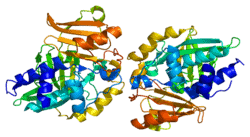
The metabolism of isoniazid is primarily mediated by the hepatic enzyme N-acetyltransferase type 2 (NAT2). This enzyme converts INH into inactive metabolites through a process known as acetylation.
Genetic Polymorphism of NAT2
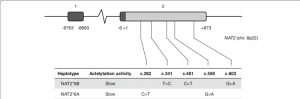
NAT2 activity is genetically determined and varies between individuals due to single nucleotide polymorphisms (SNPs). These genetic variations divide individuals into three main acetylator phenotypes:
- Fast acetylators (FF) → normal enzyme activity
- Intermediate acetylators (FS) → moderate activity
- Slow acetylators (SS) → reduced enzyme activity
This genetic diversity leads to a trimodal distribution of INH elimination, meaning drug clearance differs significantly between patients.
Knowledge Gap in Infants
While NAT2 pharmacogenetics has been extensively studied in adults, data in infants remain limited. This is particularly important because:
- Enzyme systems are still developing after birth
- Drug metabolism evolves rapidly during early life
- Body size and organ maturation both influence pharmacokinetics
Previous studies showed that INH clearance increases with age, but they failed to distinguish between:
- Growth-related effects (body weight changes)
- True enzyme maturation
Study Objective and Innovation
This study aimed to quantify the independent contributions of body growth and NAT2 enzyme maturation to INH pharmacokinetics in infants.
To achieve this, researchers developed a population pharmacokinetic–pharmacogenetic model capable of:
- Differentiating size effects from enzymatic maturation
- Comparing the three NAT2 genotypes (FF, FS, SS)
- Predicting drug clearance in early life
This represents the first pharmacogenetic population model of isoniazid in infants.
Study Design and Population
The analysis was based on data from the IMPAACT P1041 clinical trial, a randomized, double-blind, placebo-controlled study conducted in South Africa.
Features:
- Population: Infants perinatally exposed to HIV
- Age range: 3 to 24 months
- Intervention: Daily oral isoniazid (50–200 mg, weight-adjusted)
- Sampling: Blood collected at specific time points post-dose
- Sites: Cape Town and Durban
Drug concentrations were measured using high-performance liquid chromatography (HPLC), while NAT2 genotyping was performed using PCR-based molecular techniques.
Pharmacokinetic Modeling Approach
Base Model
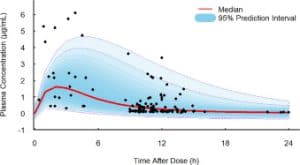
A one-compartment pharmacokinetic model with:
- First-order absorption
- First-order elimination
was used to describe INH disposition.
Parameters:
- CL/F → apparent clearance
- V/F → volume of distribution
Incorporating Growth and Enzyme Maturation
To better reflect infant physiology, the model integrated two critical factors:
1. Body Size (Allometric Scaling)
Body weight was normalized to a 70 kg adult using standard scaling:
- Clearance scales with weight^0.75
- Volume scales with weight^1
This allows meaningful comparison between infants and adults.
2. Enzyme Maturation
Enzyme maturation was modeled using sigmoidal functions, capturing how NAT2 activity evolves with age.
Maturation was defined as:
- Chronological age + gestational age
- Reflecting total developmental time
Each genotype (FF, FS, SS) was modeled separately to capture differences in maturation patterns.
Findings
1. Genotype-Dependent Drug Clearance
- Fast acetylators (FF): Highest and fastest increase in clearance
- Intermediate (FS): Moderate increase over time
- Slow (SS): Minimal or no detectable maturation effect
This indicates that genetic background strongly influences drug metabolism from early infancy.
2. Age-Related Increase in Clearance
For FF and FS infants:
- Clearance significantly increased between 3 and 24 months
- Reflecting progressive NAT2 enzyme maturation
In contrast, SS infants showed:
- Stable clearance
- Suggesting early or minimal maturation changes
3. Bioavailability Changes Over Time
Drug bioavailability increased with age:
- ~72% at 3 months
- ~95% at 24 months
This may reflect improved medication adherence and physiological development.
4. Reduction in Variability
The final model significantly reduced:
- Interindividual variability
- Inter-occasion variability
This confirms that incorporating genetics + maturation + size improves prediction accuracy.
Clinical Implications
Personalized Pediatric Dosing
This study highlights the importance of precision medicine in infants, showing that:
- Standard dosing may not be appropriate for all genotypes
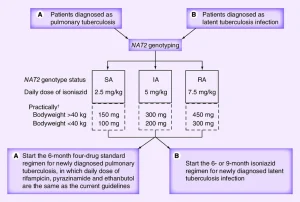
- NAT2 genotype can guide individualized therapy
HIV-TB Co-infection Management
Given the high burden of TB in HIV-exposed infants:
- Optimizing INH dosing is critical
- Preventing underdosing (treatment failure) and overdosing (toxicity) is essential
Broader Applications
The modeling framework can be extended to:
- Other pediatric drugs
- Neonatal pharmacology
- Developmental pharmacogenetics research
Future Perspectives
The findings suggest that NAT2 enzyme maturation is genotype-specific, possibly due to differences in gene expression regulation during development.
However, further research is needed to:
- Understand molecular mechanisms of NAT2 ontogeny
- Explore transcriptional and post-translational regulation
- Validate findings in diverse populations
Conclusion
This study provides a comprehensive pharmacogenetic model explaining how NAT2 genotype, enzyme maturation, body growth, and bioavailability collectively shape isoniazid pharmacokinetics in HIV-exposed infants.
By integrating genetics with developmental biology, it offers a powerful tool for:
- Improving pediatric TB prevention strategies
- Advancing personalized medicine in early life
- Enhancing clinical outcomes in vulnerable populations