
Introduction
Highly Active Antiretroviral Therapy (HAART) is the standard treatment strategy for Human Immunodeficiency Virus (HIV) infection. It is based on combination regimens that include drugs from three major pharmacological classes:
- Nucleoside Reverse Transcriptase Inhibitors (NRTIs)
- Non-Nucleoside Reverse Transcriptase Inhibitors (NNRTIs)
- Protease Inhibitors (PIs)
These combination therapies have significantly improved survival rates and quality of life in HIV-infected patients. However, as long-term treatment has become widespread, drug-related toxicity has emerged as a major clinical limitation, often representing the primary reason for treatment modification or discontinuation.
Among all adverse effects, hepatotoxicity is one of the most clinically relevant complications, as it may occur with virtually all classes of antiretroviral drugs. Clinical studies have reported not only increased rates of liver enzyme abnormalities during HAART but also cases of severe liver injury, hepatic failure, and end-stage liver disease.
Since no fully effective alternative to HAART exists for HIV control, understanding the pathophysiology, risk factors, prevention strategies, and management of antiretroviral-associated liver injury represents a major ongoing challenge for hepatologists.
This review summarizes the main mechanisms of HAART-related hepatotoxicity, key clinical risk factors, and current approaches to diagnosis and management of liver injury during antiretroviral therapy.

2. Challenges in Defining HAART-Related Hepatotoxicity
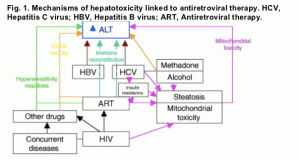
A major difficulty in evaluating antiretroviral-induced liver toxicity lies in the lack of standardized reporting across clinical studies.
2.1 Inconsistent Definitions
Although consensus guidelines exist, reporting in clinical trials is highly heterogeneous:
- Case reports often describe severe or life-threatening liver failure
- Large clinical trials typically report elevations in liver enzymes as toxicity markers
- Some studies define hepatotoxicity as >5× increase in aminotransferases, regardless of liver function impairment
However, consensus definitions of severe liver injury include:
- Jaundice
- Coagulopathy (INR > 2.5)
- Hepatic encephalopathy
The lack of uniformity leads to:
- Underestimation or overestimation of toxicity incidence
- Misclassification of hepatocellular vs cholestatic injury
- Incomplete reporting of alkaline phosphatase abnormalities
- Limited use of liver histology in clinical studies
2.2 Causality Assessment Limitations
Establishing a direct causal relationship between a drug and liver injury is complex because HIV patients often receive:
- Multiple potentially hepatotoxic medications
- Concomitant treatments with drug–drug interactions
- Substances such as alcohol or illicit drugs
- Coexisting liver diseases (viral hepatitis, fatty liver disease)
These confounders significantly complicate attribution of hepatotoxicity to a single agent.
3. Mechanisms of Antiretroviral Drug-Induced Hepatotoxicity
3.1 Mitochondrial Toxicity (NRTIs)
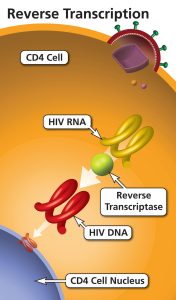
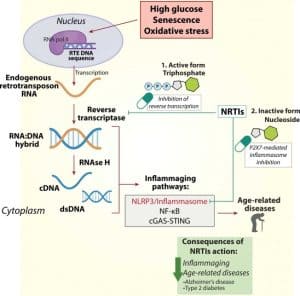
Nucleoside Reverse Transcriptase Inhibitors (NRTIs) are structural analogues designed to inhibit viral replication. However, they can also inhibit human mitochondrial DNA polymerase-γ, leading to mitochondrial dysfunction.
Mechanistic Features:
- Reduction of mitochondrial DNA content
- Alteration of mitochondrial structure
- Impaired oxidative phosphorylation
- Disruption of fatty acid and pyruvate metabolism
Relative Mitochondrial Toxicity (in vitro):
zalcitabine > stavudine > zidovudine > didanosine > lamivudine > abacavir
Lamivudine shows minimal mitochondrial toxicity due to poor mitochondrial incorporation.
Cellular and Histological Consequences:
- Microvesicular steatosis
- Enlarged and abnormal mitochondria
- Intracellular lipid accumulation
- Cholestatic features in severe cases
Pathophysiological Progression:
Mitochondrial dysfunction leads to:
- Increased reactive oxygen species (ROS)
- Lipid peroxidation
- Cytokine-mediated inflammation
- Fibrogenesis
- Activation of apoptosis via cytochrome C release
In severe cases, this mechanism can progress to fulminant hepatic failure.
3.2 Hypersensitivity Reactions (Immune-Mediated Toxicity)
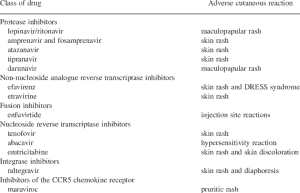
Some antiretroviral drugs induce idiosyncratic immune-mediated liver injury, characterized by unpredictable and non-dose-dependent reactions.
Commonly implicated drugs include:
- NNRTIs (especially nevirapine)
- Abacavir
- Amprenavir
Clinical Features:
- Fever
- Rash
- Eosinophilia
- Elevated liver enzymes
Histopathology:
- Hepatocellular necrosis
- Mixed inflammatory infiltrates (lymphocytes, plasma cells, eosinophils)
- Cholestatic injury patterns
Re-exposure typically results in:
- Rapid recurrence
- More severe hepatic injury
If treatment is continued, progression to acute liver failure may occur.
3.3 Other Mechanisms of Hepatotoxicity
Some antiretroviral agents cause liver injury through less well-defined mechanisms.
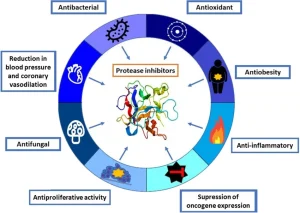
Protease Inhibitors (PIs)
Potential mechanisms include:
- Alteration of lipid metabolism via SREBP-1c activation (e.g., ritonavir)
- Hepatic fat accumulation
- Interaction with mitochondrial toxicity pathways
NRTI-Related Additional Mechanisms
- Stavudine: induction of apoptosis via DNA intercalation
- Zidovudine: telomere shortening and cellular senescence
These mechanisms contribute to hepatocellular stress and progressive liver dysfunction.
4. Clinical Manifestations of HAART-Related Hepatotoxicity
4.1 NRTIs
NRTIs were the first antiretroviral class associated with clinically significant liver toxicity.
Incidence and Presentation:
- Approximately 1.3 cases per 1000 patient-years
- Asymptomatic transaminase elevation (>5× ULN) in ~6% of patients
- Gradual onset over months, but sometimes rapid onset within days
Clinical Symptoms:
- Abdominal pain
- Anorexia
- Nausea and vomiting
- Right upper quadrant discomfort
Associated Syndrome: Lipodystrophy
NRTI-related hepatotoxicity is frequently associated with lipodystrophy syndrome, characterized by:
- Peripheral fat loss (face, limbs)
- Mitochondrial dysfunction
- Metabolic disturbances
Laboratory Findings:
- Elevated ALT/AST
- Increased GGT and alkaline phosphatase
- Hyperlactatemia and lactic acidosis
- Lipase/amylase elevation in severe cases
Severe cases may progress to:
- Acute liver failure
- Pancreatitis
- Metabolic collapse
However, most patients recover after drug discontinuation.
4.2 NNRTIs
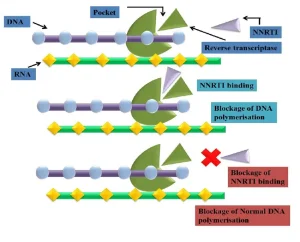
Nevirapine is the most hepatotoxic drug in this class.
Types of Liver Injury:
- Asymptomatic enzyme elevation
- Early hypersensitivity reaction
- Delayed dose-related toxicity
Clinical Features:
- Rash and fever
- Hypotension
- Eosinophilia
- Elevated IgE levels
Severe reactions may include:
- Stevens–Johnson syndrome
- DRESS syndrome
Outcome:
- Early discontinuation usually leads to full recovery
- Rare cases progress to liver failure
Efavirenz and delavirdine show lower but still measurable hepatotoxic potential, typically with mild enzyme elevation.
4.3 Protease Inhibitors (PIs)
PIs are frequently associated with liver enzyme abnormalities.
Findings:
- Up to 50% show asymptomatic transaminase elevation
- 10–20% may develop significant hepatotoxicity (>5× ULN)
- Most cases resolve despite continued therapy
Severe Outcomes:
- Rare cases of fulminant hepatic failure
- Higher risk in patients with:
- Prior liver disease
- Multiple drug exposure
- Advanced HIV infection
Histological Patterns:
- Hepatocellular necrosis
- Cholestasis
- Kupffer cell activation
- Pericellular fibrosis
Ritonavir and indinavir have been most frequently implicated, partly due to widespread clinical use.
5. Drug Interactions and Hepatotoxic Risk
A major contributor to liver toxicity is drug–drug interaction via cytochrome P450 metabolism.
Mechanisms:
- NNRTIs and PIs are metabolized via CYP3A4, CYP2C19, CYP2D6
- Enzyme inhibition or induction alters plasma drug concentrations
- Increased exposure raises hepatotoxic risk
Important Interactions:
- Ritonavir increases levels of co-administered PIs
- Efavirenz may reduce PI concentrations
- Antifungals (ketoconazole, itraconazole) increase PI exposure
- Rifampicin significantly alters antiretroviral metabolism
These interactions require careful dose adjustment to prevent toxicity.
6. Impact of Pre-Existing Liver Disease
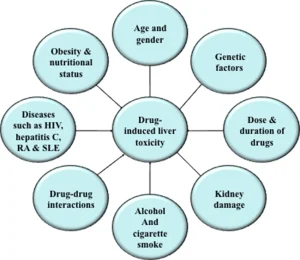
Pre-existing hepatic conditions significantly increase hepatotoxic risk.
Major Risk Factors:
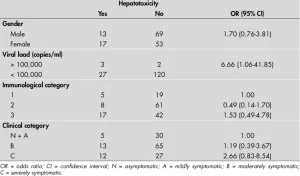
- Chronic hepatitis B or C infection
- Elevated baseline liver enzymes
- Alcohol use or drug abuse
Patients with viral hepatitis have:
- 3–8× higher risk of hepatotoxicity
- Earlier onset of liver injury
- More severe biochemical abnormalities
Immune reconstitution may also contribute to hepatitis flares during HAART, complicating diagnosis between:
- Drug-induced liver injury
- Immune-mediated inflammatory hepatitis
7. Clinical Management and Therapeutic Strategies
7.1 Monitoring
Regular liver function monitoring is essential:
- Baseline assessment before HAART initiation
- Early follow-up at 2–4 weeks
- Routine monitoring every 3 months if stable
7.2 Treatment Principles
- Mild enzyme elevation (<5× ULN): often monitored without stopping therapy
- Severe hepatotoxicity: immediate discontinuation required
- Hypersensitivity reactions: permanent discontinuation of causative drug
7.3 Management of Severe Cases
- Supportive care in liver failure
- Consider corticosteroids in immune-mediated reactions
- Avoid re-exposure to offending drug
- Use less hepatotoxic alternatives (e.g., lamivudine, abacavir)
7.4 Special Considerations
- Viral hepatitis co-infection requires individualized management
- Liver biopsy may be necessary in unclear cases
- HAART should generally not be withheld due to hepatotoxicity risk alone
8. Conclusion
HAART-associated hepatotoxicity represents a complex, multifactorial clinical challenge in HIV management. Liver injury may result from:
- Mitochondrial dysfunction
- Immune-mediated hypersensitivity
- Metabolic and drug interaction mechanisms
- Pre-existing liver disease
Although hepatotoxicity can be severe, most cases are reversible with appropriate monitoring and timely intervention. Importantly, the clinical benefits of HAART significantly outweigh its hepatic risks, even in patients with chronic liver disease.
Future improvements in treatment safety depend on:
- Better understanding of molecular toxicity mechanisms
- Improved drug interaction profiling
- Individualized antiretroviral therapy based on patient risk factors
Ultimately, optimized monitoring and personalized treatment strategies will allow safer long-term use of HAART while minimizing hepatic complications.