
Introduction
Since the introduction of saquinavir, the first HIV protease inhibitor approved in 1995, this class of antiretroviral drugs has become a cornerstone in the management of human immunodeficiency virus (HIV) infection. Over time, several protease inhibitors including lopinavir, atazanavir, darunavir, and fosamprenavir have been developed and are now widely used in highly active antiretroviral therapy (HAART) regimens.
These agents are typically combined with nucleoside reverse transcriptase inhibitors (NRTIs) to achieve sustained viral suppression. In some cases, protease inhibitor monotherapy has also shown promise in patients with long-term viral control. Overall, the success of these therapies has dramatically improved life expectancy and transformed HIV into a manageable chronic disease.
However, challenges remain particularly the emergence of drug resistance and the complexity of long-term treatment. Second-generation protease inhibitors such as darunavir, which require multiple viral mutations for resistance to develop, represent a significant advancement in overcoming these limitations.

Pharmacokinetic Characteristics of HIV Protease Inhibitors
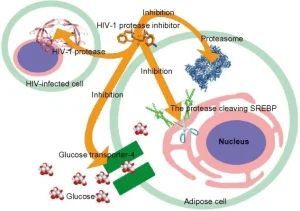
HIV protease inhibitors share several key physicochemical and pharmacokinetic properties:
- Large molecular size and peptidomimetic structure
- Low aqueous solubility
- High plasma protein binding
- Extensive metabolism by cytochrome P450 3A4 (CYP3A4)
- Relatively short plasma half-lives
Due to rapid elimination, maintaining effective drug levels requires frequent dosing, which can negatively impact patient adherence.
Ritonavir Boosting Strategy
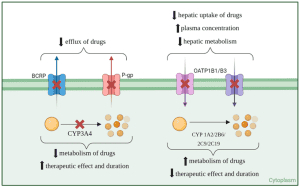
A major breakthrough in HIV pharmacotherapy was the introduction of ritonavir as a pharmacokinetic enhancer. At low doses, ritonavir potently inhibits CYP3A4, leading to:
- Increased plasma concentrations of co-administered protease inhibitors
- Prolonged drug half-life
- Reduced dosing frequency (often once daily)
- Improved adherence and therapeutic outcomes
Despite these advantages, ritonavir boosting significantly increases the risk of drug–drug interactions (DDIs), particularly with medications metabolized by CYP3A4.
The Critical Role of Drug Transport Proteins
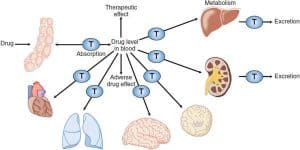
Beyond metabolic enzymes, drug transport proteins play a central role in determining the pharmacokinetics and pharmacodynamics of protease inhibitors. These proteins regulate:
- Drug absorption (intestinal transport)
- Distribution (e.g., penetration into lymphocytes and the brain)
- Elimination (hepatic and renal excretion)
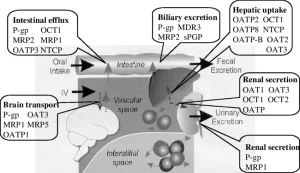
Transporters are broadly categorized into two major families:
1. Solute Carrier (SLC) Transporters
SLC transporters primarily mediate drug uptake into cells.
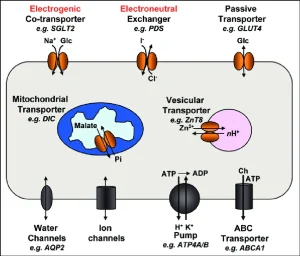
Organic Anion Transporting Polypeptides (OATPs)
OATPs are widely expressed in the liver, intestine, kidney, and placenta. They facilitate the transport of endogenous compounds and drugs, including protease inhibitors such as:
- Lopinavir
- Saquinavir
- Darunavir
Clinical studies have shown that genetic polymorphisms in transporters like OATP1B1 can significantly alter drug exposure, contributing to interindividual variability in treatment response.
Organic Cation Transporters (OCTs)
OCTs are mainly expressed in the liver and kidneys and transport small cationic molecules. While protease inhibitors are generally poor substrates, they can act as inhibitors, potentially affecting the pharmacokinetics of co-administered drugs such as NRTIs.
2. ATP-Binding Cassette (ABC) Transporters
ABC transporters are energy-dependent efflux pumps that reduce intracellular drug concentrations.
P-glycoprotein (P-gp)
P-gp is one of the most clinically relevant transporters and is expressed in:
- Intestinal epithelium
- Blood–brain barrier
- Lymphocytes
It actively exports protease inhibitors out of cells, thereby:
- Reducing oral bioavailability
- Limiting drug penetration into target tissues
- Contributing to drug resistance
Many protease inhibitors are both substrates and inhibitors of P-gp, creating complex interaction profiles.
Breast Cancer Resistance Protein (BCRP)
BCRP contributes to the efflux of various drugs and is expressed in multiple tissues. Protease inhibitors often inhibit BCRP, potentially altering drug distribution and increasing the risk of interactions.
Multidrug Resistance-Associated Proteins (MRPs)
MRPs (e.g., MRP1, MRP2, MRP3) are involved in the transport of organic anions and drug conjugates. Their role in protease inhibitor pharmacokinetics is less clearly defined but may contribute to:
- Hepatobiliary excretion
- Drug resistance mechanisms
- Variability in drug response
Drug–Drug Interactions Involving Transporters
Protease inhibitors are highly prone to DDIs due to their interactions with both metabolic enzymes and transport proteins.
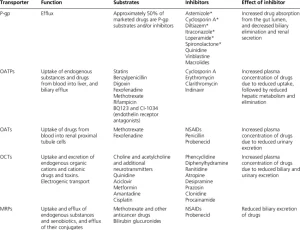
Transporter Inhibition
Protease inhibitors can increase plasma concentrations of co-administered drugs by inhibiting efflux transporters such as P-gp. Clinically relevant examples include:
- Increased exposure to digoxin, fexofenadine, and loperamide
- Enhanced intracellular drug accumulation
Transporter Induction
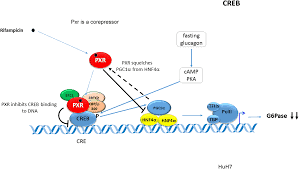
Some protease inhibitors can induce transporter expression via activation of nuclear receptors such as pregnane X receptor (PXR). This may lead to:
- Reduced drug exposure
- Decreased therapeutic efficacy
Interactions with Antituberculosis Drugs
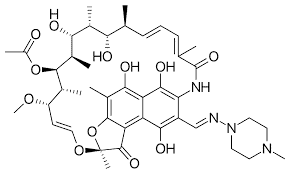
Co-treatment with tuberculosis particularly with rifampicin, a strong enzyme and transporter inducer can drastically reduce protease inhibitor concentrations (up to 90%). In such cases, rifabutin is often preferred due to its lower induction potential.
Transporters and Drug Toxicity
Transporters also play a role in drug-induced toxicity. For example:
- Inhibition of bile acid transport can contribute to cholestasis
- Interference with bilirubin transport may cause hyperbilirubinemia, particularly with atazanavir and indinavir
- Altered lipid transport may contribute to metabolic disorders associated with protease inhibitor therapy
Impact of HIV Infection and Coinfections
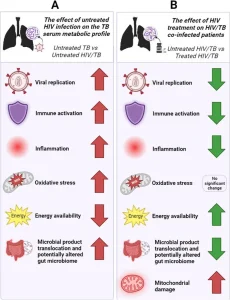
HIV infection, as well as coinfections such as hepatitis C, can significantly alter transporter expression and function. Key observations include:
- Changes in P-gp expression in immune cells
- Altered activity of MRPs and OATPs
- High interindividual variability due to genetic and environmental factors
Additionally, inflammatory cytokines ( TNF-α, IL-6) associated with HIV infection can modulate transporter expression, further complicating pharmacokinetics.
Conclusion: Toward Personalized Antiretroviral Therapy
Drug transport proteins are critical determinants of the pharmacokinetics, efficacy, and safety of HIV protease inhibitors. Their influence extends beyond simple drug movement to include:
- Drug resistance mechanisms
- Tissue-specific drug distribution
- Complex drug–drug interactions
Understanding these processes is essential for optimizing HIV therapy, particularly in patients receiving multiple medications or with comorbid conditions.
Future research focusing on pharmacogenomics, transporter biology, and personalized medicine will be key to improving treatment outcomes and minimizing adverse effects in HIV-infected patients.