
Introduction to HIV and Modern Treatment Strategies
Human Immunodeficiency Virus (HIV) remains a major global health challenge, with tens of millions of individuals affected worldwide. Since its emergence, HIV infection has transitioned from a fatal disease to a manageable chronic condition, largely due to the development of combination antiretroviral therapy (cART).
cART involves the use of multiple antiretroviral (ARV) drugs from different classes to effectively suppress viral replication, restore immune function, and reduce HIV-related morbidity and mortality. Today, more than 20 ARV drugs are available, categorized into key classes such as:
- Nucleoside/Nucleotide Reverse Transcriptase Inhibitors (NRTIs)
- Non-Nucleoside Reverse Transcriptase Inhibitors (NNRTIs)
- Protease Inhibitors (PIs)
- Integrase Strand Transfer Inhibitors (INSTIs)
- Entry and Fusion Inhibitors
The primary goal of HIV therapy is simple but critical: achieve durable viral suppression while minimizing drug toxicity and adverse effects.
Why Pharmacogenomics Matters in HIV Therapy
Despite the effectiveness of cART, patient responses to antiretroviral drugs vary significantly. This variability is influenced by multiple factors, including:
- Age, sex, and ethnicity
- Coexisting diseases (e.g., liver or kidney dysfunction)
- Drug–drug interactions
- Genetic differences affecting drug metabolism and transport
This is where pharmacogenomics becomes essential. Pharmacogenomics studies how genetic variations influence drug response, helping clinicians tailor treatments to individual patients.
Genetic differences in:
- Drug-metabolizing enzymes
- Drug transporters
- Immune response genes
can directly impact both drug efficacy and toxicity.
A Landmark Example
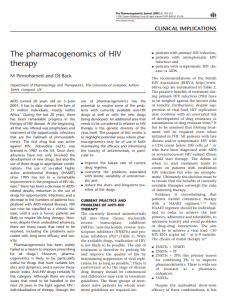
One of the most successful applications of pharmacogenomics in HIV care involves the drug abacavir, an NRTI widely used in combination therapies.
Hypersensitivity Risk
Abacavir can cause a serious hypersensitivity reaction (HSR) in approximately 5–8% of patients. Symptoms typically appear within the first few weeks of treatment and may include:
- Fever
- Skin rash
- Gastrointestinal symptoms (nausea, vomiting, diarrhea)
- Fatigue and muscle pain
- Respiratory issues
If not promptly recognized, this reaction can become life-threatening.
Genetic Screening Breakthrough
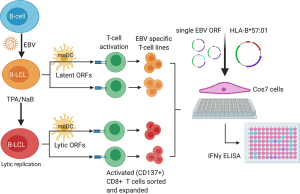
Research identified a strong association between abacavir hypersensitivity and the HLA-B*57:01 allele, a genetic marker in the immune system.
Key findings:
- Patients positive for HLA-B*57:01 are at high risk of hypersensitivity
- Patients negative for HLA-B*57:01 have an extremely low risk
Clinical Impact
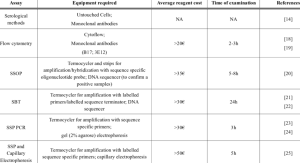
Screening for HLA-B*57:01 before starting abacavir is now:
- Standard clinical practice
- Highly cost-effective
- Easy to interpret and implement
This represents a model example of personalized medicine in HIV treatment.
Tenofovir: Genetic Factors and Renal Toxicity
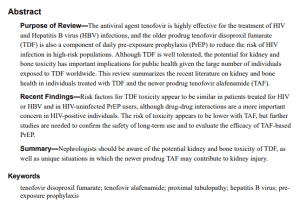
Tenofovir is another widely used NRTI, commonly included in both HIV treatment and prevention strategies (PrEP and PEP).
Safety Profile and Risks
Although generally well tolerated, tenofovir has been associated with:
- Reduced kidney function
- Increased serum creatinine
- Rare cases of Fanconi syndrome
- Bone mineral density loss
Role of Genetic Variability
Genetic variations in drug transporters especially:
- ABCC2
- ABCC4
- ABCC10
can influence how tenofovir is processed in the kidneys.
These variations may lead to:
- Higher intracellular drug concentrations
- Increased risk of renal toxicity
Clinical Relevance
While these genetic associations are promising, routine pharmacogenetic testing is not yet recommended for tenofovir. Instead, clinicians rely on:
- Regular kidney function monitoring
- Dose adjustments in patients with impaired renal function
Zidovudine and Lamivudine: Limited Pharmacogenetic Impact
Zidovudine (AZT)
Zidovudine, one of the first HIV drugs developed, undergoes metabolism via the UGT2B7 enzyme.
Some genetic variants can:
- Increase drug clearance
- Alter intracellular active metabolite levels
However, current evidence does not support routine genetic testing due to limited clinical impact.
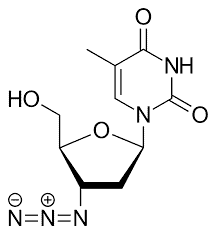
Lamivudine
Lamivudine is another NRTI with a strong safety profile. It is transported by multiple proteins, including:
- Organic cation transporters (OCTs)
- Multidrug resistance proteins (MRPs)
Although genetic variations may influence drug levels, these effects are not clinically significant, and pharmacogenetic testing is not required.

Efavirenz
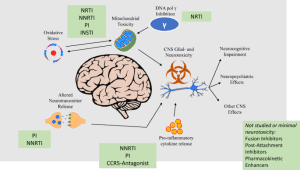
Efavirenz, a commonly used NNRTI, shows significant variability in patient response due to genetic differences.
Central Nervous System Side Effects
High plasma levels of efavirenz are associated with:
- Dizziness
- Insomnia
- Vivid dreams or nightmares
- Hallucinations (in rare cases)
Approximately 20% of patients discontinue therapy due to these side effects.
Genetic Influence: CYP2B6
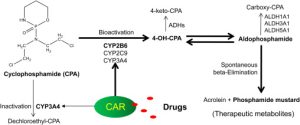
Efavirenz is primarily metabolized by the CYP2B6 enzyme.
Key genetic variant:
- CYP2B6 516G>T
Patients with this variant:
- Have slower drug metabolism
- Exhibit higher plasma drug concentrations
- Are at increased risk of toxicity
Clinical Implications
Pharmacogenetic-guided dosing may:
- Improve drug tolerability
- Maintain therapeutic effectiveness
- Reduce healthcare costs
Although not yet universally implemented, efavirenz pharmacogenomics is one of the most promising areas for personalized HIV therapy.
Protease Inhibitors and Genetic Variability
Atazanavir
Atazanavir is associated with elevated bilirubin levels, leading to:
- Jaundice (cosmetic effect)
- No significant liver damage
This effect is linked to genetic variants in UGT1A1, the enzyme responsible for bilirubin metabolism.
Although genetic testing can predict this side effect, it is not routinely required, as the condition is generally harmless.
Integrase Inhibitors
Drugs such as:
- Raltegravir
- Dolutegravir
are key components of modern HIV therapy.
Although genetic variations in enzymes like UGT1A1 may slightly affect drug levels:
- These changes are small
- They do not require dose adjustments
Thus, pharmacogenetic testing is currently not necessary for these drugs.
Challenges in Implementing Pharmacogenomics in HIV Care
Despite clear benefits in specific cases, widespread adoption of pharmacogenomics faces several barriers:
- Limited availability of genetic testing
- Cost and reimbursement issues
- Lack of clinician training
- Insufficient clinical evidence for many drugs
- Ethical and regulatory concerns
Additionally, drug interactions can alter enzyme activity (a process known as phenoconversion), complicating the interpretation of genetic data.
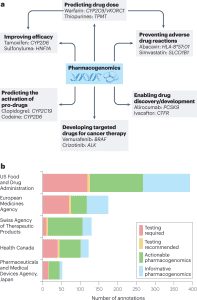
Future Perspectives
Advances in genomic technologies, including:
- Genome-Wide Association Studies (GWAS)
- Whole-Genome Sequencing (WGS)
are expected to identify new genetic markers that influence:
- Drug response
- Disease progression
- Viral resistance
Future HIV care may integrate:
- Pharmacogenetic testing
- Therapeutic drug monitoring
- Personalized dosing strategies
This approach could be particularly valuable for:
- Pediatric patients
- Pregnant women
- Patients with comorbidities
- Individuals on complex drug regimens
Conclusion
Pharmacogenomics is transforming the landscape of HIV treatment by enabling more precise and individualized therapy. While its routine use is currently limited to specific cases—most notably HLA-B*57:01 testing for abacavir ongoing research continues to expand its clinical relevance.
As technology advances and barriers are addressed, pharmacogenomics has the potential to:
- Improve treatment outcomes
- Reduce adverse drug reactions
- Enhance long-term patient care
The integration of genetic insights into HIV therapy represents a critical step toward fully personalized medicine.