
Introduction
The introduction of combined antiretroviral therapy (cART) has profoundly transformed the clinical course of infection with the Human Immunodeficiency Virus. Once considered a fatal condition, HIV is now managed as a chronic disease, with significant reductions in morbidity and mortality worldwide.
However, this increased life expectancy has revealed new long-term complications, particularly metabolic disorders linked both to chronic infection and prolonged exposure to antiretroviral therapy (ART). Among these, dyslipidemia has emerged as a major clinical concern due to its strong association with cardiovascular disease.
Metabolic disturbances observed in HIV-positive individuals include insulin resistance, impaired glucose homeostasis, and abnormalities in lipid metabolism. These alterations may lead to clinical conditions such as diabetes mellitus, abnormal fat redistribution, and increased cardiovascular risk.
Lipodystrophy Syndrome and Body Fat Redistribution
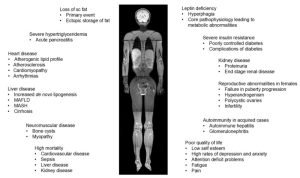
One of the hallmark metabolic complications in HIV is the lipodystrophy syndrome, first described in 1998. This condition encompasses a constellation of abnormalities including dyslipidemia, fat redistribution, and features of metabolic syndrome.
Clinical Manifestations
- Lipohypertrophy (fat accumulation):
- Increased abdominal (visceral) fat
- Enlarged breasts
- Dorsocervical fat accumulation (“buffalo hump”)
- Lipoatrophy (fat loss):
- Loss of subcutaneous fat in the face, limbs, and gluteal region
- Prominent veins in extremities
- Facial changes such as sunken cheeks and nasolabial folds
These morphological changes are often accompanied by lipid abnormalities such as elevated total cholesterol, increased low-density lipoprotein (LDL), and hypertriglyceridemia, contributing to a pro-atherogenic profile.
Mechanisms of Dyslipidemia in HIV
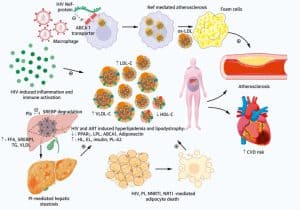
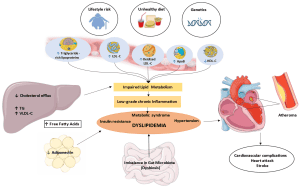
Dyslipidemia in HIV results from a complex interplay between the virus itself, chronic inflammation, and the effects of antiretroviral drugs.
HIV-Related Factors
Even before the widespread use of ART, patients with advanced HIV infection exhibited lipid abnormalities, including:
- Elevated triglycerides
- Reduced high-density lipoprotein (HDL)
Chronic immune activation and inflammation play a central role, and low CD4+ T-cell counts have been associated with increased cardiovascular risk.
Antiretroviral Therapy and Lipid Alterations
1. Protease Inhibitors (PIs)
Protease inhibitors are strongly associated with dyslipidemia. Drugs such as ritonavir can significantly increase triglyceride and cholesterol levels.
Proposed mechanisms include:
- Interference with lipid-regulating proteins
- Increased hepatic production of lipoproteins
- Impaired clearance of triglyceride-rich particles
- Disruption of adipocyte differentiation via pathways involving PPARγ
PIs may also inhibit glucose transporter function (GLUT-4), contributing to insulin resistance and further metabolic imbalance.
2. Nucleoside Reverse Transcriptase Inhibitors (NRTIs)
NRTIs, particularly thymidine analogues, are linked to:
- Mitochondrial toxicity
- Reduced mitochondrial DNA synthesis
- Adipocyte apoptosis
These effects contribute to both lipoatrophy and metabolic dysfunction, including dyslipidemia.
3. Non-Nucleoside Reverse Transcriptase Inhibitors (NNRTIs)
Although less implicated, some NNRTIs ( efavirenz) may contribute to lipid abnormalities, including elevated cholesterol levels.
Cardiovascular Risk in HIV Patients
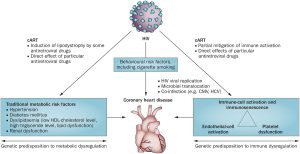
Accumulating evidence indicates that HIV-infected individuals especially those receiving cART have an increased risk of cardiovascular disease.
Large cohort studies have demonstrated:
- A progressive increase in myocardial infarction risk with longer exposure to ART
- A relative annual increase in cardiovascular risk during the first years of therapy
Importantly, traditional risk factors such as smoking, hypertension, and diabetes remain highly prevalent and act synergistically with HIV-related metabolic disturbances.
Interestingly, treatment interruption strategies have been associated with even higher cardiovascular risk, suggesting that HIV itself is an independent contributor to vascular disease.
Epidemiology of Dyslipidemia in HIV
Dyslipidemia is highly prevalent among HIV-infected individuals on ART, with rates ranging from 30% to 80%, depending on treatment regimens and diagnostic criteria.
Common lipid abnormalities include:
- Hypertriglyceridemia (most frequent)
- Hypercholesterolemia
- Reduced HDL cholesterol
These changes typically appear within 3 to 6 months after initiating antiretroviral therapy, particularly in regimens containing protease inhibitors.
Role of Lifestyle in Managing Dyslipidemia
Lifestyle modification remains the first-line intervention for managing dyslipidemia in HIV.
Recommended Strategies
- Reduced intake of saturated fats and simple sugars
- Increased consumption of:
- Fruits and vegetables
- Whole grains
- Dietary fiber
- Regular physical activity
Although improvements in body composition and overall health are consistently observed, the direct impact on lipid profiles in HIV patients remains variable.
Dietary factors such as high fat intake and alcohol consumption are positively associated with dyslipidemia, while fiber intake shows protective effects.
Omega-3 Fatty Acids and Nutritional Interventions
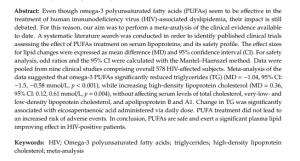
Omega-3 fatty acids (fish oil) have shown modest benefits in reducing triglyceride levels in HIV patients, although results are inconsistent.
Some studies report:
- Significant triglyceride reduction
- Possible increase in LDL cholesterol
Combination approaches (diet + supplementation) appear more effective than single interventions.
Pharmacological Management of Dyslipidemia
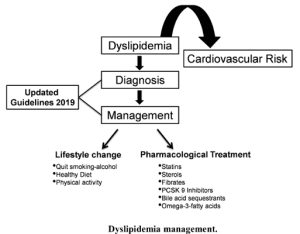
When lifestyle interventions are insufficient, pharmacological treatment is required.
1. Statins
Statins are the primary agents for lowering LDL cholesterol. However, their use in HIV patients requires caution due to drug interactions with antiretroviral therapy.
- Contraindicated: simvastatin, lovastatin
- Use with caution: atorvastatin, rosuvastatin
- Safer options: pravastatin, fluvastatin
Drug interactions are mainly mediated through cytochrome P450 (CYP3A4), which is inhibited by many protease inhibitors.
2. Fibrates
Fibrates are particularly effective for hypertriglyceridemia and are generally well tolerated.
Common agents include:
- Gemfibrozil
- Fenofibrate
- Bezafibrate
They can significantly reduce triglyceride levels and moderately improve cholesterol profiles.
3. Combination Therapy
In severe cases, combining statins and fibrates may be considered, although this increases the risk of adverse effects and requires careful monitoring.
Optimization of Antiretroviral Therapy
In some patients, switching antiretroviral regimens may improve lipid profiles. However, this strategy must balance metabolic benefits with virological control and resistance risks.
Clinical Management Approach
The management of dyslipidemia in HIV-infected individuals should be:
- Individualized
- Based on cardiovascular risk assessment
- Aligned with general population guidelines, while considering drug interactions
Principles
- Lifestyle modification is the first step
- Pharmacological therapy when needed
- Careful selection of lipid-lowering agents
- Continuous monitoring of metabolic parameters
Conclusion
Dyslipidemia represents a major metabolic complication in individuals living with HIV, driven by a combination of viral effects, chronic inflammation, and antiretroviral therapy.
While significant progress has been made in understanding its mechanisms and management, challenges remain—particularly regarding drug interactions and long-term cardiovascular risk.
Future strategies should focus on developing safer antiretroviral agents with minimal metabolic impact, alongside optimized, personalized approaches to cardiovascular prevention in HIV-positive populations.